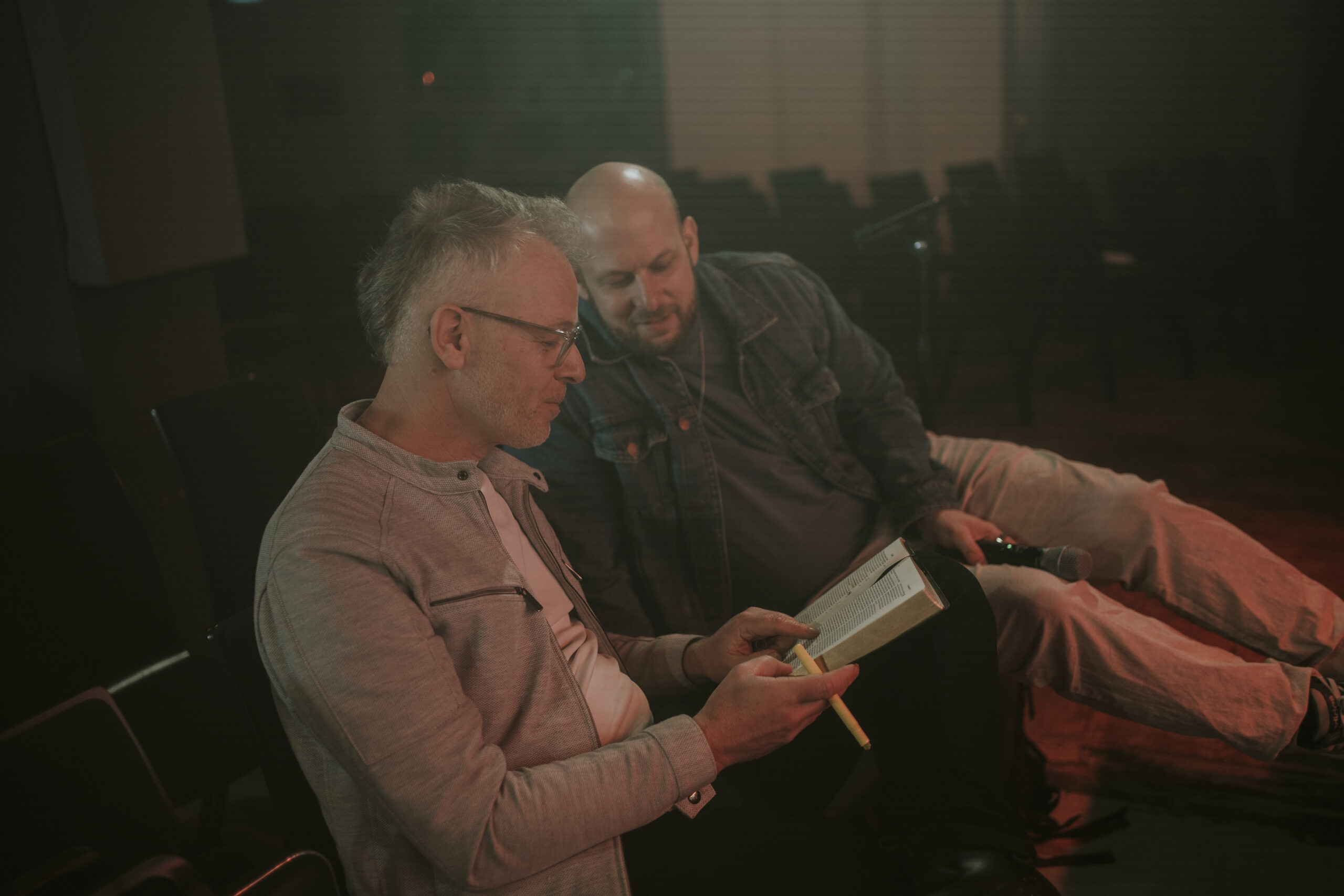
Bible reading tools
Discover new sides—but how?!
Do you ever find yourself wanting to read the Bible but not knowing where to start? Here are some tips to help you make the most of your time with the Bible.

Find a way to engage with the Bible
The Bible—more than just a book.
Even though the 66 books of the Bible were written by 40 authors over a period of 1,500 years, they have only one Author: God. Realize that He truly can—and, above all, wants to—meet you in His Word. God wants to speak to every aspect of your life through the Bible—to your mind and your emotions, but also to provide guidance on very practical matters.
Ask the Holy Spirit to grant you wisdom and to show you personally how this passage applies to your life.
How can I avoid distractions?
Create an environment where you can relax: Put your phone on airplane mode, close your door, etc. You might find that worship music helps you focus, or that writing down all the thoughts and to-dos on your mind on a piece of paper and consciously setting them aside helps.
Which translation should I read?
The Bible is available in all kinds of translations and adaptations. Sometimes the focus is on a translation that is as literal as possible, and sometimes on clarity. Sometimes the language is modern and colloquial, and sometimes it stays true to the original text.
Here you’ll find an overview of the German translations and their main focuses. Take a look and see which one suits you best, or work with several at the same time. To easily compare different translations (in different languages): www.bibleserver.com.
Luther Bible: The first and best-known German translation
Elberfelder: A translation that is as literal as possible
New Geneva Translation: Easy to understand and faithful to the original text
Hope for All: Modern and written in everyday language
… and many more!
If you know other languages: Try reading Bible passages you’re already familiar with in a different language to discover new insights!
Can it be any shorter?
Long texts aren’t really my thing
Find the right dose
You can encounter God in just a few sentences! The following options provide you with short Bible verses every day; some also include a few additional reflections:
→ The Daily Devotionals (from the Moravian Church, available as an app or book)
→ YouVersion Bible App: Verse of the Day
→ Solid Joys / Daily Devotional App by John Piper: Daily Bible verse with a short devotional.
→ Our Daily Bread App: Individual Bible passages and brief reflections as daily inspiration.
→ Various devotional books, including those on specific topics (feel free to contact our MediaStore team)
Try to remember a specific verse throughout your day, perhaps at the same time every day (e.g., after lunch). With the YouVersion app, you can set the verse of the day as an “alarm” on your phone.
Ways to make the most of a short text
the „3 Gs“:
God’s Word: Read a (short) Bible passage
Godly Prayer: Talk to Jesus about the passage by turning your thoughts into prayer
GetFree: Give Jesus the things you’d like to leave with Him and not carry over into the next day.
S.O.A.P. :
Scripture: Read the Bible passage
Observation: Begin an inner dialogue with Jesus—what are your thoughts on this passage?
Application: What specific actions do you want to take?
Prayer: What specific things can you pray for today?
Repeat:
Read this verse throughout the day and incorporate it into your daily life.
Take to heart:
Take time to reflect on a single verse, meditate on it, and let it sink in; visualize what is described and let it come alive in your mind’s eye (e.g., Psalm 36:10 or Isaiah 40:11).
Learn:
Daily verses are perfect for memorizing

Try out Bible reading plans
There are countless different reading plans available as books or for smartphones on a variety of everyday and Bible-specific topics (e.g., managing money, dating, biblical figures, God’s promises, …). Many reading plans follow a specific schedule (e.g., reading through the Bible in half a year or a full year, an Advent calendar reading plan, and much more) and also differ in their target audiences (e.g., for children or adults, singles or couples, etc.).
The YouVersion Bible app offers a wide variety of Bible reading plans, and each lesson usually takes just a few minutes to read. It also includes ICF reading plans that help you delve deeper into the sermons! www.youversion.com
The Bible Reading Association has developed a Bible reading plan for various audiences, which explains a Bible passage to you every day and asks you questions about it. https://shop.bibellesebund.de
Just search for Bible reading plans on scm-shop.de or in your Bible app and see what you find!
Important: Reading guides are another person’s thoughts and interpretations of this text, and they often focus only on short passages or verses—so you’ll have to figure out the context for yourself! However, they can be helpful if you’re still finding it hard to engage with Bible passages and aren’t sure how to approach them.
What is the best way to read the Bible?
3W questions about the text:
Who is God?
Who am I?
How should I live?
INDUCTIVE METHOD:
Observe – Interpret – Apply.
www.precept-ministries.de/induktiv/
5-Finger Method:
THUMBS UP: What do you like about the text? Which message do you agree with?
POINTING FINGER: What does this passage draw your attention to? What is God trying to tell you or show you through it? In what way does this passage admonish you?
Middle finger: Does the text mention sin or guilt? What stinks, and how do you realize you’ve made a mistake?
Ringfinger: Does the text contain a promise or a pledge? What does God promise you or His people?
LITTLE FINGER: What do you want to change about yourself, your life, or your behavior? Which parts of this text can you or do you want to put into practice?
What should I look for in texts?
Context: If your translation uses section or chapter headings, feel free to ignore them for now! Pay attention to transitional words! Does the section begin with words like “However” or “Then”? What came before that?
Practical approach: You can put yourself in their shoes, play out the situation in your mind, learn about the culture (e.g., Google the place), or ask yourself how the people involved might have felt or what you would have said or thought.
Read it personally, not just to accumulate knowledge: Read the Bible and view the characters it describes as people you can relate to: What the people in the Bible do, you might also do in your own way today; what they are called to do might also be a calling for you; and just as God meets them, He can meet you too.
Ask yourself why that passage or story appears in the Bible at all (and in that form). Would you have left it out or told it differently? Include God and the image you have of him in your reflections.
Prayerful reading: Stay in dialogue with God as you read, and invite the Holy Spirit to be with you even before you begin, asking for understanding!
What can help me understand the text better?
Read the parallel passages for the verses (especially those you think you already know well); these are listed next to the corresponding verses in most Bibles.
Biblical Symbols: To learn how recurring themes can help you understand the Bible, check out the ICF Munich podcast “Symbols in the Bible – How the Bible Interprets Itself.”
Concordance: A list of all (or at least most) words in the Bible, along with their respective references. For example, you can see where the place name “Bethlehem” appears throughout the Bible.
Concordances are available for each Bible translation.
Subject Index: Similar to a concordance, this lists Bible passages, but not by keywords they contain, rather by the topics addressed in those texts.
Encyclopedias: Contain a wealth of historical, archaeological, cultural, and other information on biblical topics, such as the Calwer Bible Encyclopedia.
Bible commentaries that explain and interpret the text within its context, such as the IVP Bible Background Commentary. There are also specialized commentaries, for example on individual books of the Bible or on the Jewish background of the New Testament epistles. Take a look around scm-shop.de and see what catches your interest!
https://www.bibelkommentare.de
Study Bibles include commentaries and explanations in addition to the biblical text, such as the Inductive Study Bible from Precept Ministries or the NIV Study Bible.
The Bible Project: Videos that explain the books of the Bible and various topics in a clear and easy-to-understand way:
www.dasbibelprojekt.de/
www.biblehub.com Most of the common commentaries are available online there. You can also view sections of text and individual words from a verse in their original language, along with explanations, to get a feel for the original text.
IMPORTANT: Comments and the like, just like devotional books, are always interpretations by other people. You can use them as a supplement or aid, but as a general rule, you should always read the Bible itself first, not texts about the Bible.

more ideas
Marker system:
Certain terms (e.g., the word “Spirit” or attributes of God), situations (e.g., prayer or a change of location), and verses (e.g., promises or instructions) are highlighted with specific colors and symbols. For inspiration, see, for example, Hans-Joachim Eckstein’s Bible highlighting system.
Your own “research topic”:
You can also choose a personal topic (e.g., health, leadership, self-confidence, …), highlight or note down relevant verses, and create your own summary.
Read several times:
For example, read the section or chapter first in a “rough” way, then carefully and slowly, and finally pick out a key verse.
Weekly Observation:
Take a closer look at a verse or a passage for an entire week!
creativity
Interpret individual verses or entire stories as a song, dance, video, play, or (calligraphic) artwork. There are special Bibles with sturdier paper and space for creative page design: www.bibleartjounaling.de
You can also interpret texts and verses through calligraphy: the Bible Lettering workbook by Tabea Wippermann; the 30 Days of Bible Lettering Challenge (an online project featuring new verses for creative writing every month).
Read the text aloud:
In relevant verses (e.g., promises), substitute yourself (“I,” “me,” “my”) or your own name, and actively claim or proclaim these Bible passages—in other words, pray the Bible verses!
Reading together:
For example, in a small group—this fosters mutual motivation and brings a variety of perspectives. To spark a conversation about specific passages, you can have a “silent discussion”: Print or write a Bible passage on a large sheet of paper and jot down your thoughts on it, but (at first) without speaking to one another.
The Bible as an audiobook
Listen to various translations: for example, audio Bibles on scm-shop.de, in the YouVersion Bible App, or on various websites.
Glo. The bible
Software that gives you a multimedia exploration of the Bible’s content and world, featuring virtual tours, photos, timelines, and much more.
Keep a reading journal:
Notiere dir Gedanken, Antworten und Fragen, die du beim Lesen hattest oder besondere Verse und freue dich nach einiger Zeit über deinen persönlichen Bibellese-Schatz! Vielleicht motiviert es dich auch zu sehen, wie viele Tage am Stück du bereits Bibel gelesen hast (bei der YouVersion-App gibt es z. B. einen Tracker).