Kritische Fragen
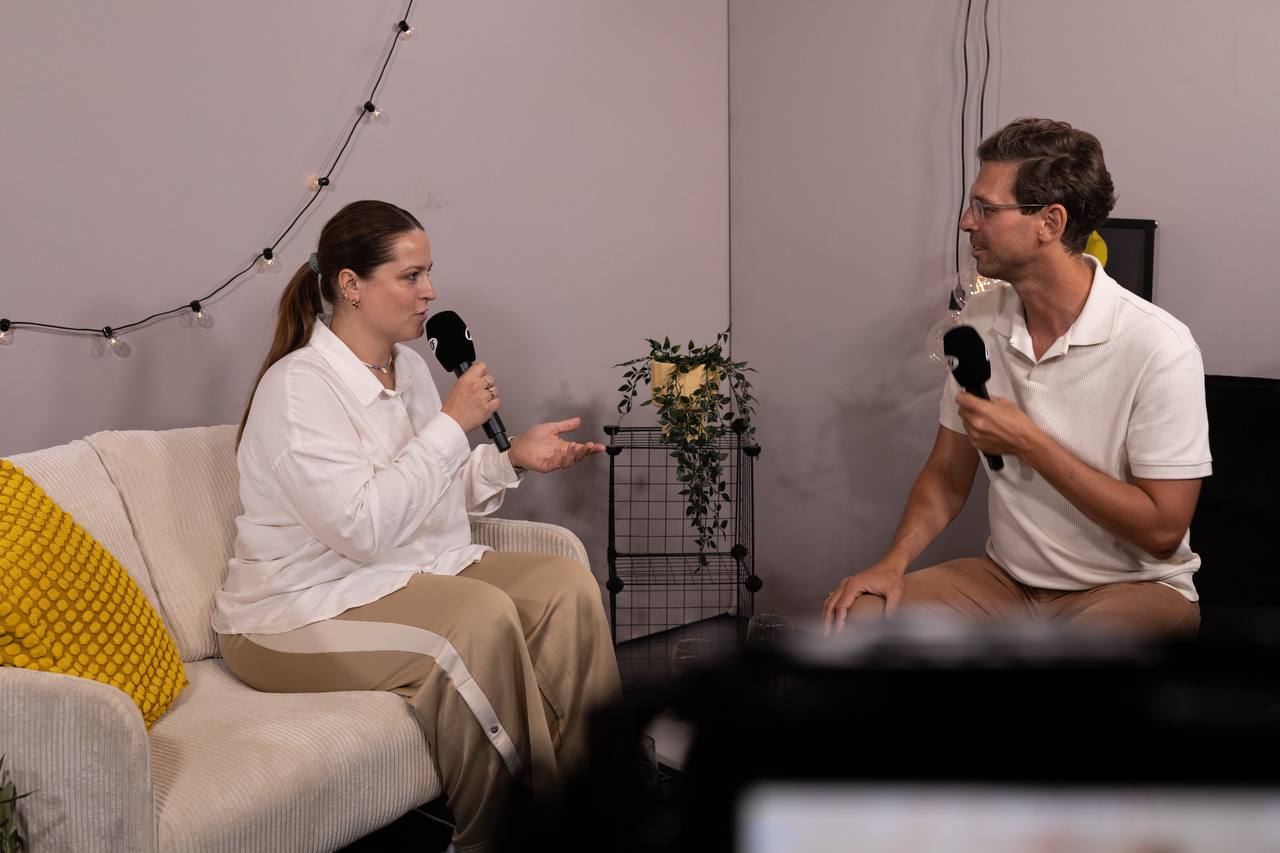
TOBIAS AND FRAUKE TEICHEN, SENIOR PASTORS OF THE ICF MUNICH, ANSWER YOUR QUESTIONS HERE!
Time and again, people are surprised that churches can also be modern. In Germany, it is not yet widely known that there are other forms of vibrant Christian congregations in addition to the two large regional churches.
That’s why we at ICF Munich are constantly receiving questions about certain topics relating to our church, which we answer transparently here.
Is the ICF Munich a cult?
A New kind of a church: instead of a pastor in a robe, in a free church like the ICF you meet a pastor in jeans and sneakers.
Why are faith and the church inspiring so many people again?
At the ICF Munich, we create a modern and life-oriented environment with inspiring church services, contemporary music, relevant Sermons and a warm atmosphere.
Welcome – regardless of sexual orientation?
ICF Munich stands for a culture of openness and respect. Everyone is welcome here – regardless of origin, identity or sexual orientation.
What does it mean to live finances in harmony with God?
As a church, we accompany people in their personal and spiritual development – and this also includes dealing with finances. We believe that Christian faith is a holistic way of life – and finances are part of this.
What role does cooperation with the ICF Munich play?
Volunteering is a central part of our community culture. At ICF Munich, you have the opportunity to make meaningful use of your time, experience community and make a difference
How many people are part of ICF Munich?
You don’t have to sign up to anything at ICF Munich to be part of the church. Are people who feel they belong to ICF Munich restricted in their right to co-determination and insight into structures and finances within the church?
Does the ICF Munich also offer confession?
For over 2,000 years, acknowledging one’s own fallibility, confessing guilt before God and realigning oneself with his path has been at the heart of the Christian faith. This step is voluntary and personally motivated.
Sexuality without shame? Our answer to Purity Culture
What is Purity Culture, and does ICF Munich have anything to do with it? For us, sexuality is a gift from God and not a taboo; at ICF, it’s about orientation, values, and grace rather than rules and shame.
Why is it so dark in our church?
Dark room, stage lights: The atmosphere at ICF Munich is intentionally designed this way so that visitors can engage with God more freely.
Why do we use so many English terms?
Celebration, Get Free, Impact: You’ll encounter many English terms at ICF. The reason lies in our name, the international vision of the movement, and the desire for people from all nations to feel at home.
How we handle critical reports
Not every criticism requires a public response. Tobias and Frauke Teichen talk about when silence is wise, why conflicts are better resolved personally, and what ICF has learned from criticism.
IS THE ICF MUNICH A CULT?
WHAT DO YOU THINK ABOUT THE FACT THAT FREE CHURCHES ARE OFTEN COMPARED TO SECTS?

🎥 By clicking, content from Youtube loads. You allow cookies for marketing. Learn more in our Privacy Policy.
What does “free church” mean?
We understand that the term “free church” raises questions for some people. Free churches are Christian congregations with independent organizations, free membership and no church tax. At ICF Munich, we go one step further: we do not have an official membership – but a voluntary, so-called heart membership. Everyone is invited to become part of the community by their own decision.
Freedom instead of coercion
Our aim is to enable people to have an authentic faith – without pressure or rigid rules. Transparency, agile structures and an open, warm atmosphere characterize our church. ICF Munich does not fulfill any of the objective criteria that serious experts use to identify sects.
Faith that is understood
Martin Luther already recommended “looking people in the mouth”, i.e. speaking their language. And that is exactly what we do: our church services are modern, realistic and understandable. It’s not about show, but about genuine faith that touches the heart and everyday life.
A place for seekers of meaning
We see it time and time again: people like coming to church – voluntarily and enthusiastically. With us, they find community, orientation and a place where they can discover or deepen their faith in Jesus Christ. What counts here is not membership of a particular type of church, but the relationship with God himself.
HERE YOU CAN GET AN INSIGHT INTO OUR CHURCH CULTURE, WHO WE ARE… AND WHO WE ARE NOT:
A key characteristic of cults is that they bind members through pressure, manipulation or social control. There is no membership at ICF Munich, and anyone can leave the church at any time without consequences. There is of course no punishment or social ostracism if you stop coming, which would often be the case in sect-like structures.
Sects tend to present themselves as the only true religion or faith community. However, ICF Munich sees itself as part of the worldwide Christian Church and clearly recognizes the legitimacy of other denominations and Christian communities. There is no teaching that says that only members of ICF Munich are “saved” or that other churches or denominations are wrong or dangerous.
Sects often work with secret teachings or hidden structures. ICF Munich, on the other hand, is transparent in its theological and organizational structures:
- The services are open to the public and Sermons can be listened to online at any time free of charge.
- The finances are communicated openly and donations are completely voluntary. The finances can be viewed on request.
- There are clear management structures that are transparent to the outside world.
An important point is the cooperation with an independent Clearing Office to which anyone can turn. This creates a high degree of transparency and enables an open feedback culture.
A central feature of cults is to isolate members from their original social environment.
- At ICF Munich, no one is asked to break off contact with family or friends.
- The ICF encourages members to be active in their professional, social and family environment and to live their faith authentically there.
Sects often have a charismatic leader whose authority must not be questioned.
At ICF Munich, there is a management team instead of a leading individual.
The ICF relies on the principle of “servant leadership”, which means:
- Leadership is not an exercise of power, but a service to others.
- Leaders are not determined by personal claims to power, but by their willingness to serve.
- There is a mutual responsibility within the leadership team, but also all other teams, to ensure transparency and a healthy feedback culture in every direction.
- Leadership happens at eye level and not in hierarchical structures.
This form of leadership is clearly different from sectarian structures, which are often based on untouchable “gurus” or dominant leaders.
Everyone who works at ICF Munich has signed a code of conduct.
Some cults demand high financial contributions from their members or oblige them to sign over all their assets to the Organizations.
- At ICF Munich, donations are voluntary.
- There are no compulsory contributions or financial expectations.
- ICF Munich lives the biblical principle of tithing, which is practiced by free churches worldwide. The tithe is not demanded, but is given on an absolutely voluntary basis. Find out more here:
Youtube

CONCLUSIONS:
THE ICF MUNICH IS NOT A SECT, BUT A CHRISTIAN FREE CHURCH WITH MODERN WORSHIP SERVICES AND A WELCOMING COMMUNITY.
Let’s talk about:: How do I recognize Christian sects and conspiracy theories? With Tobias Teichen (Lead Pastor ICF Munich) and Dr. Matthias Pöhlmann (Representative for Sect and Worldview Issues of the Evangelical Lutheran Church in Bavaria) Moderation: Konstantin Fritze
🎥 By clicking, content from Youtube loads. You allow cookies for marketing. Learn more in our Privacy Policy.
FAITH AND CHURCH
WHAT DO YOU NEED TO BE A PASTOR AT THE ICF MUNICH? DO YOU NEED A DEGREE IN THEOLOGY?
🎥 By clicking, content from Youtube loads. You allow cookies for marketing. Learn more in our Privacy Policy.
Passion instead of just a CV
Our pastors come from very different backgrounds. A degree in theology is possible, but not a mandatory requirement – vocation, character and lived faith are decisive.
Training with practical relevance
Many of our leaders have theological training – either through studies or through practical training programs at recognized free-church training institutions that are specifically geared towards ministry in the ICF.
More than just pastors
With around 80 employees, we also employ event managers, worship leaders, technicians, graphic designers, accountants and much more. Our church thrives on a variety of talents.
Focus on further development
Through mentoring, training and further education, we not only promote knowledge, but above all personal maturity, love for people and the ability to communicate faith in an authentic and relevant way.
WHY ARE FAITH AND THE CHURCH INSPIRING SO MANY PEOPLE AGAIN, ESPECIALLY YOUNG PEOPLE, WHEN THE NUMBER OF CHURCHGOERS IN GERMANY IS SHRINKING?
A church that inspires young people
Many young people are searching for meaning, community and genuine faith. At ICF Munich, we create a modern and real-life environment with inspiring church services, contemporary music, relevant Sermons and a warm atmosphere.
Faith that changes lives
Our church is growing – and that makes us happy because it means more people are hearing the good news of Jesus Christ: His love, His death and His resurrection. The Bible is our foundation – as God’s Word for over 2.3 billion Christians worldwide and as one of the most influential books in world history.
Participate, help shape, grow with us
Whether in the technical team, on stage, in social projects or small groups: Young people get actively involved with us, discover their talents and grow personally and spiritually. Parents report gratefully on the positive development of their children.
Deepening faith – journeying together
With small groups, workshops and the Bible College, we offer many ways to get to know the faith more deeply and experience real community. Our goal: a church that strengthens young people in their relationship with God and encourages them to discover their calling.
HOW DO YOU DIFFER FROM THE CATHOLIC OR PROTESTANT REGIONAL CHURCH, APART FROM THE PREMISES?
Church for today – dynamic and true to life
As a modern church, we focus on personal relationships, flexibility and social relevance. Rigid structures? Hardly any – but openness to change and genuine encounters.
Worship services with heart and creativity
Our celebrations are creative, interactive and contemporary: with modern music, visual elements and Sermons that speak to the heart of life. For us, church is more than just an event – it is a community that lives out its faith in everyday life.
Free, independent, and communally supported
We are not a state-recognized large church, but a free Christian movement. Our work is supported by voluntary donations – out of conviction and out of love for the church.
SEXUAL ORIENTATION
ARE ALL PEOPLE REALLY WELCOME AND ABLE TO PARTICIPATE FULLY IN COMMUNITY LIFE, REGARDLESS OF THEIR SEXUAL ORIENTATION?
🎥 By clicking, content from Youtube loads. You allow cookies for marketing. Learn more in our Privacy Policy.
ICF’S VISION STATES THAT PEOPLE “NO MATTER WHERE (THEY) COME FROM AND WHAT THEIR STORY IS” WILL FIND A HOME AT ICF.
Welcome as you are
ICF Munich stands for a culture of openness and respect. Everyone is welcome here – regardless of origin, identity or sexual orientation.
Clear protection concepts
In certain areas – such as child and youth work – special protection standards apply. Application procedures with extended certificates of good conduct apply here in order to consistently prevent abuse and assaults. People with such a history or even a criminal record cannot work here.
Responsibility in management roles
For leadership roles, we expect a lifestyle that reflects our values and is based on biblical Christian teaching. We are concerned with authenticity, acting as a role model and respectful cooperation.
FROM THE ICF’S POINT OF VIEW, IS HOMOSEXUALITY SOMETHING THAT SHOULD AND CAN BE CURED?
Healing means holistic restoration
At ICF, we understand healing not as a change in sexual orientation, but as an inner renewal. It can affect relationships, personal hurts or faith – and finds its origin in a living relationship with Jesus Christ.
Sexuality in a biblical context
The Bible describes sexuality as a valuable part of human identity – with marriage between a man and a woman as the intended framework for lived intimacy (cf. Genesis 2:24; Ephesians 5:31). Millions of Christians worldwide share this view. From this perspective, homosexuality is not understood as part of the biblical ideal.
Different paths – equal dignity
We know that sexuality is a sensitive topic and that people have different life stories. Whether someone feels part of the LGBTQ community or not, we believe that everyone is loved by God and can experience healing, acceptance and freedom on their own personal journey of faith.
On the road together
Our aim is not to judge people, but to accompany them on their journey to God. Our church should be a place where everyone can grow and take steps in their relationship with Jesus Christ – in an atmosphere of respect, clarity and love.
WHAT IS THE POSITION OF THE ICF MUNICH ON THE LAW ON PROTECTION AGAINST CONVERSION TREATMENTS THAT CAME INTO FORCE IN 2020?
Protection from conversion treatments
We welcome the law on protection against so-called conversion treatments, which came into force in 2020. It is important to us that people are protected from harmful or manipulative interventions in their sexual orientation or gender identity. At ICF Munich, we promote a faith based on freedom, dignity and genuine love.
Protection of human rights and trust
We support the fact that extremely harmful measures such as electroshock treatments or hypnosis are punishable by law, as is any therapy that is carried out against the will of the individual. The law also ensures that pastoral conversations are still possible without manipulative pressure to change. These conversations offer people a safe space to talk about their innermost issues honestly and without fear of judgment.
Freedom of personal choice
Voluntary sexual reorientation must be possible at any time and in any direction.
Diversity and space for all
At ICF Munich, we meet people with very different life stories. Some have had same-sex relationships in the past and are now living in happy heterosexual marriages, while others maintain their homosexual orientation or are part of the transgender community. There are also people who have chosen to live a celibate life regardless of their sexual orientation. There is room for all these people here.
Our focus: love and acceptance
We believe in the love and acceptance that every person deserves. Our mission is to share the gospel of God’s love and create a community where everyone feels welcome.
FINANCES
WHAT DOES IT MEAN WHEN YOU TALK ABOUT LIVING YOUR FINANCES IN HARMONY WITH GOD?
Finances & generosity – A living expression of trust
🎥 By clicking, content from Youtube loads. You allow cookies for marketing. Learn more in our Privacy Policy.
As a church, we accompany people in their personal and spiritual development – and this also includes dealing with finances. The Bible talks about money surprisingly often: around a third of Jesus’ parables deal directly or indirectly with dealing with possessions, generosity and responsibility.
We believe that Christian faith is a holistic way of life – and finances are part of it.
Biblical principles instead of pressure
Our teaching is based on biblical principles such as generosity, gratitude and responsible stewardship. Everyone is free to make their own decisions. Our stance is clear: no pressure, no manipulation – but encouragement for a healthy and free approach to money.
Generosity is also practiced in a very practical way. For example, all proceeds from the books of our senior pastor Tobias Teichen go back into the work of the church.
Assuming social responsibility
We observe that money management is hardly taught in the German education system. That’s why we offer practical help, e.g. through financial workshops that teach the basics of budgeting, saving and avoiding debt. Our aim is to empower people to make smart decisions and handle money sustainably and responsibly.
Faith that remains relevant
ICF Munich is a church that lives faith in a contemporary way and places Jesus Christ at the center. Our foundation is the Christian Bible and the Apostles’ Creed – just like in the Catholic or Protestant church.
We are part of the ICF Movement and belong to the German Evangelical Alliance (DEA), a network of around 1.3 million Christians from various Protestant, free-church, and regional church congregations. The Alliance actively advocates for religious freedom, social justice, and missionary work.
In short: We understand generosity as an expression of freedom – not a duty. Our concern is to inspire people to live with their finances in trust in God, without being determined by material possessions.
HOW DO YOU ENSURE THAT PEOPLE WHO FEEL THEY BELONG TO THE ICF MUNICH DO NOT FEEL PRESSURED TO DONATE BEYOND THEIR MEANS?
Voluntary donations out of conviction
No one is pressured into donating at ICF Munich. Every donation is voluntary and there is no control over whether someone donates or not. Our attitude is based on the biblical principle: “Let each one give as he has purposed in his heart – not reluctantly or under compulsion, for God loves a cheerful giver.” (2 Corinthians 9:7).
Biblical principles and financial literacy
As a free church that operates without church tax, we live from the generosity of those who share our vision. The principle of tithing is widespread in many Christian churches worldwide and is supported by various biblical passages (e.g. Genesis 14:18-20; Malachi 3:8-10). At the same time, we recognize that many people, especially young people, often have little financial education. We counter this with financial workshops that teach sustainable, responsible ways of dealing with money.
The joy of giving
According to the Bible, giving is more blessed than receiving (Acts 20:35). Studies also show that regular donations increase happiness and have health-promoting effects, such as lower blood pressure and a stronger immune system (Prof. Stephen Post). Arthur C. Brooks from Harvard showed in studies that donors are often more successful financially – not despite giving, but because of it.
“Effective altruism” and biblical values
The “Effective Altruism” movement recommends donating 10% of your income to do as much good as possible. Interestingly, these principles are in line with biblical values and not only promote good in the world, but also personal freedom in dealing with finances.
WHAT FINANCIAL CONTRIBUTIONS DOES THE ICF MUNICH MAKE TO THE ICF MOVEMENT?
The Movement contribution
ICF Munich makes a contribution to the independent association “ICF Movement”, based in Zurich, amounting to 3.5% of the free annual donations. This contribution supports central tasks such as the development of websites for all churches, coaching for pastors, further training courses and the coordination of church foundations.
A joint investment
ICF Zurich makes this contribution, as do all other ICFs worldwide. This creates a sustainable infrastructure for the global movement. Incidentally, many other large Christian Organizations, companies and social works rely on a similar model.
Voluntary collaboration for a greater vision
The Movement contribution is based on voluntary collaboration and a shared commitment to a greater vision. We see it as an investment in the long-term growth and networking of our global community.
COOPERATION
WHAT ROLE DOES COLLABORATION IN THE ICF MUNICH PLAY?
🎥 By clicking, content from Youtube loads. You allow cookies for marketing. Learn more in our Privacy Policy.
Volunteering with purpose
Volunteering is a central part of our community culture. At ICF Munich, you have the opportunity to make meaningful use of your time, experience community and make a difference. We offer people a valuable alternative to the often digital leisure activities of the younger generation – and space to rediscover themselves and their gifts.
Unleash your strengths
Would you like to get involved? Whether music, technology, organization or prayer – you will find many opportunities to live out your talent with us. Programs such as the School of Ministries or our leadership workshops will help you to develop your skills and take on responsibility.
HOW IS IT ENSURED THAT VOLUNTEERS ARE NOT OVERLOADED?
Commitment in the right measure
It is important to us that your commitment matches your stage of life. In regular discussions with our team, we check together whether your commitment is right for you – and intervene if it becomes too much. For us, it goes without saying that protecting people is more important than the progress of the community.
One of the largest volunteers in Munich
It is with great gratitude that we can say that ICF Munich – alongside the volunteer fire department – is one of the city’s largest volunteer organizations. In 2024, over 1,500 volunteers were involved in a wide variety of areas. Without this lifeblood, our diverse work in children and youth work, family and marriage support, social projects and much more would not be possible. We make sure that everyone is free to choose their own commitment according to their personal interests. Tasks are clearly communicated and distributed in such a way that no one is overburdened.
Room for development
We are constantly learning. Especially in areas such as kids and youth work, we have developed structures to create a healthy balance. At ICF Munich, you are welcome to say “no” – and we support you in recognizing and maintaining your own boundaries.
An enriching experience
Despite all mindfulness, commitment can be challenging. That’s why we consciously promote a culture of care – through training, discussions and an open attitude. We want your commitment at ICF Munich to strengthen you – not drain you.
MEMBERSHIP
ARE THE PEOPLE WHO FEEL THEY BELONG TO THE ICF MUNICH RESTRICTED IN THEIR RIGHT OF CO-DETERMINATION AND IN THEIR INSIGHT INTO STRUCTURES AND FINANCES WITHIN THE COMMUNITY?
🎥 By clicking, content from Youtube loads. You allow cookies for marketing. Learn more in our Privacy Policy.
How many people are part of ICF Munich?
Volunteering with great impact: Around 1,500 people currently volunteer at ICF Munich – making us one of the largest volunteer-run Organizations in the city. Without this voluntary commitment, our work would not be possible in this form.
Thousands celebrate divine service together
Every Sunday, around 4,100 people attend ICF Munich services – on site in Munich City, at our locations in Augsburg, Freising, Passau and Starnberg as well as online via livestream in our Micro Churches or from home.
Welcome – without obligation
At ICF Munich, you are welcome just as you are – without any membership or formal obligations. You don’t need to sign a contract or take on any financial responsibility to be part of our church. Even if you no longer want to come at some point, you don’t have to unsubscribe. Our approach is deliberately different from traditional church models.
Our roots – inspired by the first church
Our vision and structure are based on the early church as described in the Bible: lively, approachable, communal. We focus on flexibility, personal responsibility and a culture of trust.
Clarity on finances
Financial transparency is very important to us. All of our finances are audited externally – by independent experts and a committee that also looks beyond the community. In this way, we ensure that donations are used responsibly.
Open and comprehensible
Every year we publish a comprehensive annual report with all income, expenditure and the financial development of ICF Munich. The report is available to everyone – online or on request. Anyone who would like to gain more in-depth insights can contact us personally at any time.
Decisions that move – not slow down
Our management teams work quickly and flexibly. Volunteers and employees can shape and co-decide independently. Creative ideas should not be slowed down by lengthy meetings – we want things to get rolling.
Church that gives freedom
ICF Munich is a large community with many committed people. For everything to work well, it needs structure – but without rigid rules. If you feel you belong, you can help shape things: in small groups, teams, events or projects. You decide how you want to get involved.
CONFESSION / GET FREE
DOES THE ICF MUNICH ALSO OFFER CONFESSION?
🎥 By clicking, content from Youtube loads. You allow cookies for marketing. Learn more in our Privacy Policy.
Finding freedom – through reflection and forgiveness
For over 2,000 years, acknowledging one’s own fallibility, confessing guilt before God and realigning oneself with his path has been at the heart of the Christian faith. This step is voluntary and personally motivated. Forgiveness and true freedom – that is what God offers every person. The “Lord’s Prayer” also reminds us of this: “Forgive us our trespasses as we forgive those who trespass against us.”
Get Free
The Get-Free-Seminar is an event for anyone who wants to deepen their faith and reflect on personal issues. With the help of questionnaires and impulses, you have the opportunity to take an honest look at your life – at your own pace and under your own control.
Confidential and self-determined
What you write down stays only with you. Your notes and documents are neither passed on nor archived – they belong exclusively to you and will be destroyed by you at the end. You decide what you share and what you don’t.
Personal support
You can share your thoughts with a confession partner in a confidential conversation – if you wish. These companions have gone through the seminar themselves and have been carefully prepared and accompanied by the pastoral team.
Orientation through the Ten Commandments
The Ten Commandments are more than just ancient religious rules – they have shaped our ethical thinking and many of the basic values of our society. At the Get Free seminar, they serve as a moral guideline for personal reflection.
Space for personal discussion
The goal of Get Free is to help people recognize inner blockages and progress in their faith. The questions asked are not mandatory, but an invitation: they encourage reflection on stressful topics or unresolved areas of your life – voluntarily and at your own pace.
You decide what you want to share
There is no obligation to write anything down or tell anything. Everything remains in your hands. You decide which questions you want to answer for yourself and which topics you look at at all.
A personal journey – not a public confession
Get Free is not a stage, but a safe space. It is not about external pressure, but about your own, silent confrontation with what moves you – trusting in a God who forgives and liberates.
WHAT HAPPENS WHEN PARTICIPANTS HAVE EXPERIENCED TRAUMA AND THE MEMORY OF THE TRAUMA SURFACES DURING THE GET FREE?
Mindful with sensitive topics
We are aware that issues such as trauma are sensitive and complex. The Get Free seminars offer space for personal reflection and spiritual growth – but they are no substitute for therapeutic or psychological treatment.
No therapy – but a safe framework
We see our services as a supplement, not an alternative to medical or psychological care. We encourage people with deeper psychological wounds to turn to professional counseling centers – e.g. the regional churches – or therapists.
Protection and responsibility
To prevent abuse of any kind – whether spiritual, psychological or physical – we have set up an independent ombudsman’s office. It is open to everyone, even in cases of suspicion. We want everyone to feel safe and taken seriously.
Hope that sustains
Faith in Jesus Christ stands for hope and change. Many experience new freedom through him. As a church, we can be part of this journey – but with a clear awareness of our limits and the responsibility we bear.
PURITY CULTURE
SEX, SHAME & FAITH
🎥 By clicking, content from Youtube loads. You allow cookies for marketing. Learn more in our Privacy Policy.
What is Purity Culture?
Purity Culture is a movement that originated in the USA and primarily views sexuality from a moral perspective. At its core is the idea that sexuality belongs within marriage and that young people should commit to this. This objective can certainly have good motivations. However, criticism mainly arose regarding the approach: In a religious environment where rules were paramount, people often felt bad if they didn’t adhere to them. Many consequently perceived sexuality as something evil or dirty, which led to a repressed and unhealthy approach to it.
Pressure, Control, and Intrusiveness
People who have experienced this culture report feeling controlled and pressured. Some found it intrusive that their intimacy was dictated. Instead of fostering maturity, sometimes the opposite happened. Where church structures reinforce such dynamics, in the worst case, a culture emerges that has nothing to do with the culture of God. A possible consequence of this is also that sexuality is no longer discussed at all.
How does ICF Munich handle sexuality?
At ICF Munich, it’s exactly the opposite: sexuality is an important topic because it is a gift from God, in which there is much to discover. An example of this is the annual couples’ conference “AmoreXperience”, attended by thousands of couples. There, sexuality is discussed naturally and without shame or awkwardness. The desire is for people’s sexuality to flourish. This includes questions like: How does it actually work? How can it succeed? What was God thinking when He created it?
Is Sexuality Something Evil?
Sexuality itself is not evil. It is a wonderful invention of God, comparable to fire: In the fireplace, it provides warmth and life, but outside of it, it can destroy an entire house. Sexuality therefore also has its abysses: abuse, hurt, frustration, and questions like “Am I beautiful?” or “Am I loved?”. All of this belongs to the topic and deserves honest attention. God is not ashamed of it. The Song of Solomon in the Bible openly celebrates erotic love and is the opposite of a repressed culture. The crucial question is what a respectful, appreciative, and loving approach to sexuality can look like.
If I Feel Condemned
Sometimes people feel condemned by what is said on stage, especially if they have lived differently themselves. There are two thoughts on this: The Bible says, “Test everything; hold fast to what is good.” No one has to accept everything said at ICF as one hundred percent correct. It’s about being inspired, listening, and letting things resonate, without pressure or accusation. Furthermore, the Bible is not there to condemn, but to provide guidance. Jesus brings light into darkness and offers healing, change, and restoration. It’s not about being “bad,” but about discovering things in one’s own life and living differently with God’s help.
A Safe Space to Talk
At ICF, everyone should be welcome, regardless of what they have experienced so far. At the same time, biblical principles are discussed. Both belong together for ICF. People report that they have experienced a safe space here where they could talk openly and honestly about all topics without being judged. For some, this has positively changed their lives, their ability to form relationships, and their marriage.
Why are difficult topics also discussed?
As in a family, topics that people are already concerned about and that are constantly present in the media should also be addressed in the church. An example is masturbation. The Bible says: Everything is permissible, but not everything is beneficial. The question of “fruits” is helpful: Does something lead to a fulfilling sexuality with a partner, or rather to isolation and addiction? Are things being compensated for that should be addressed at the root? The answer is neither “never” nor “always,” but: What serves my best interest, and how do I flourish? It is important that everyone decides out of their own conviction and not because a pastor says so or because they are fundamentally against it.
No Rules, but Values and Convictions
At ICF, there are no rules, but values and convictions. It’s not about everyone being uniform. The commandments of the Bible are there for people to live and flourish. That’s why the “Why behind the What” is always explained: What is actually behind something? The question is not “Is this appropriate?”, but “Why is it so?”. This way, a look at the background can also show that sexuality is not just for oneself, but a gift with which one can bring joy to someone else.
Grace Instead of Perfection
It’s not about being a perfect person. Jesus died for everyone, even for the moments when you know the right thing and still do the wrong thing. God offers guidance and at the same time access to forgiveness and change. This brings relief, even to leaders who themselves need forgiveness and change. A culture of fear and shame, on the other hand, prevents honesty and keeps people from coming to God. Jesus lived a different culture: unconditional love, where one can be honest, combined with truth and guidance.
Remaining Self-Critical
ICF always wants to honestly examine whether the culture being lived is truly a God-culture and does not slip into a Purity Culture in a negative sense. This includes properly training leaders so that they do not become religious or overly critical. Where there is something to learn, they want to learn. On the topic of sexuality, there is the book “Love, Sex, God” as well as many Sermons and podcasts.
WHY IS IT SO DARK IN THE CHURCH?
LESS DISTRACTION, MORE PRIVACY
🎥 By clicking, content from Youtube loads. You allow cookies for marketing. Learn more in our Privacy Policy.
The building
Part of the explanation is practical: the worship room is located in the basement and is set up more like a club, without natural light. But that is not the only reason.
Less distraction
Especially for people coming for the first time or those who are still at the beginning of their faith journey, a very bright room can be overwhelming. In bright light, you automatically look around and get distracted: Who is raising their hands, who is kneeling, who is crying?
Space for your own emotions
When people encounter God during a service, emotions often surface: gratitude, tears, being moved. In a darkened room, no one feels observed and can deal with these emotions more freely. The lighting is therefore not just for show, but directs the focus to the stage.
Open to change
If ICF had its own building, it would plan for natural light in the right places, including the worship room, while still being able to darken it selectively. As long as the darkness serves the people, it will remain, and if that changes, it will be adjusted.
WHY DO WE USE SO MANY ENGLISH TERMS?
WHY IS IT CALLED A CELEBRATION INSTEAD OF A SERVICE AT ICF?
🎥 By clicking, content from Youtube loads. You allow cookies for marketing. Learn more in our Privacy Policy.
The name says it all
ICF stands for “International Christian Fellowship” and has been internationally oriented from the very beginning. The movement started in Switzerland and is active today from Cambodia to Brazil to Germany.
A church for all nations
The goal is to reach people of all nations without creating subcultures—such as an African, a German, and a Russian church side by side. Instead, everything should mix. That is why the services are translated into many languages.
English as a common language
In Germany, English is the language most easily agreed upon for international groups. Many English words have long been used naturally, especially by the younger generation, and are quickly understood, such as “Impact.” The official language of the ICF movement is also English, which is why the pastors consciously learn the language.
You can call it whatever you like
No one is required to adopt these terms. Instead of “Celebration,” you can say church service; instead of “Small Group,” you can say home group; and instead of “Team,” you can say ministry circle. The important thing is that people find each other quickly. The English terms are not for show; there is a “Why behind the What” for each one.
HOW WE HANDLE CRITICAL REPORTS
HOW DOES ICF REACT TO CRITICISM?
🎥 By clicking, content from Youtube loads. You allow cookies for marketing. Learn more in our Privacy Policy.
Not every criticism needs an answer
Not every misunderstanding needs to be cleared up publicly. The decisive question is whether a response is appropriate and brings healing or leads to escalation. Silence does not mean running away; it can be a matter of discipline and self-reflection. Even Jesus remained silent before the court, even though he was innocent. However, there is no one-size-fits-all approach: always being silent or always speaking doesn’t work; it requires wisdom.
Resolving conflicts personally
Behind every critical report, there is usually a personal story. That is why conflicts should first be resolved in private, with a third or fourth person if necessary. Not everything belongs in the public eye. ICF also offers conversations following a report, for example with journalists or with people who have been hurt. Experience shows that deep, honest encounters are often possible on a heart level. Whether someone wants to have the conversation is voluntary.
Subjective truths
In conflicts, there are often very different perceptions, similar to a divorce. If both sides present their view publicly, in the end, no one is right, and the hurt tends to grow.
Planks and specks
Following the principle of Jesus, ICF first looks at its own “plank” before seeing the “speck” in others. Even with criticism perceived as unfair, the leadership team asks what they can learn from it.
What has grown out of criticism
Concrete structures have emerged from feedback and a willingness to learn over the last 30 years:
- an independent ombudsman’s office for complaints and allegations,
- collaboration with an external agency for child protection,
- a code of honor signed by every employee.
Loving people instead of being right
The goal is not to publicly debate who is right, but to love people, resolve conflicts, and move forward together.
Clearing Office
“This church is a family characterized by unconditional love, unity, and servant leadership.”
Our pursuit of this ideal from our vision can be undermined by conflict and abuse of power. Therefore, we want to identify and address unhealthy developments at an early stage. For this reason, we at ICF have decided to commission and appoint an independent, external and non-discretionary Clearing Office (ombudsman’s office).

If you have any questions on this topic, please write to us!